Kriti Maini (BAH'25)
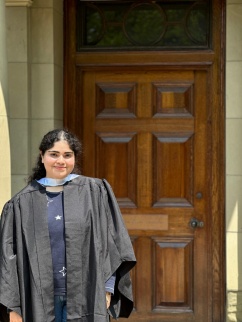
Kriti (BAH'25) graduated with a Combined Honours in Political Science and History.
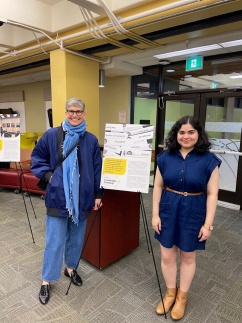
Kriti had the opportunity to be mentored by FASS Dean Jennifer Andrews as part of the ±«Óãtv Student Leadership Academy
Kriti Maini graduated from ±«Óãtv in 2025 with a Bachelor of Arts with a Combined Honours in Political Science and History. She curently works for Blacklake, an emerging global national security firm that is building the infrastructure enabling governments, defense primes, and innovative technology companies to work together more effectively across the Western alliance by helping tech founders navigate complex defense innovation pathways and foreign markets.
We asked Kriti to share some memories from her time as a Dal student, how her Arts and Social Sciences degree has helped her on her professional journey so far, and what advice she has for students.
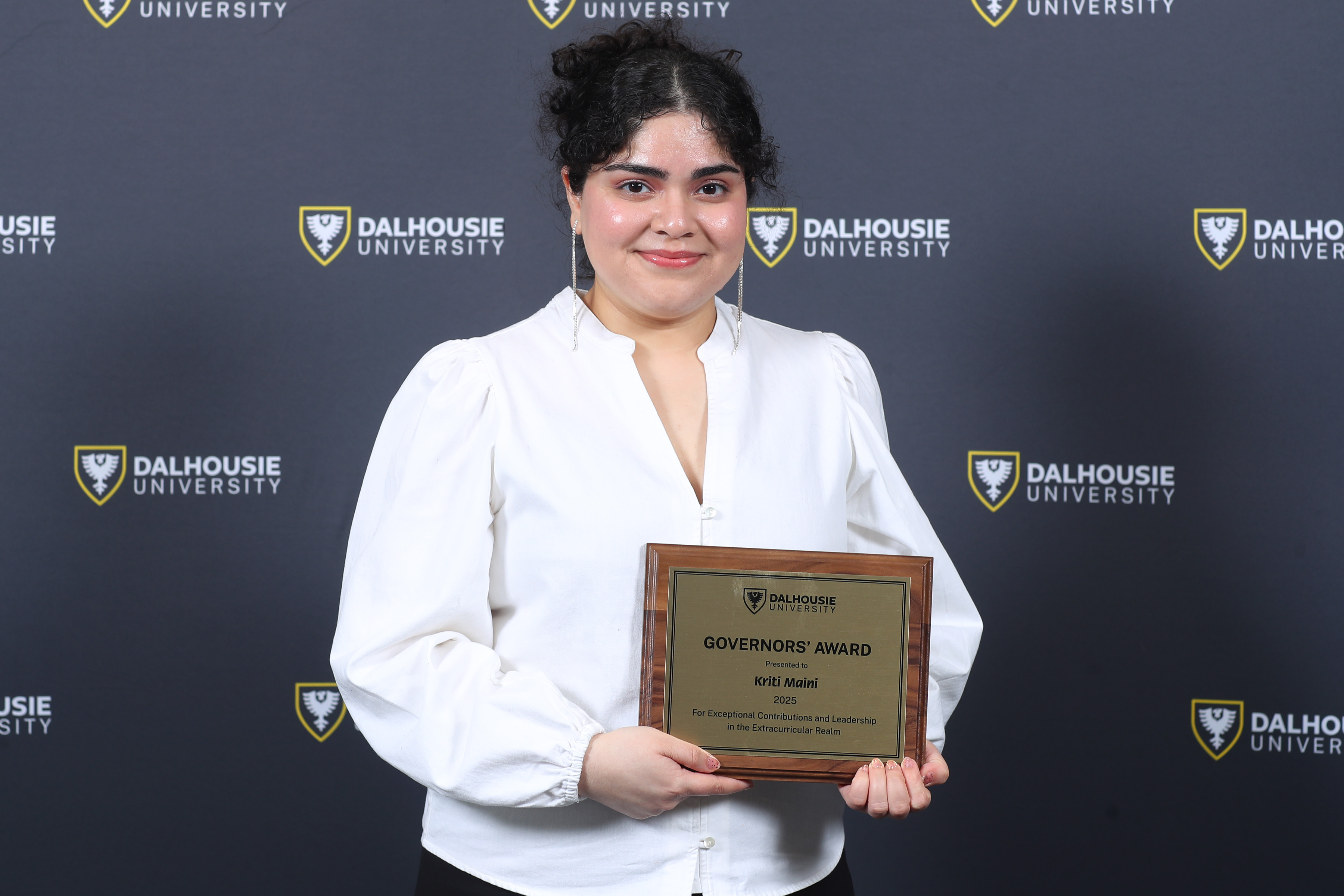 At the 2025 ±«Óãtv Impact Awards, Kriti was a recipient of the annual Board of Governors' Award.
In what way did your program help position you for and/or set you on your career path?
Looking back, I can clearly see the influence of the "butterfly effect" or the concept that tiny, seemingly insignificant actions can lead to vastly different, unpredictable outcomes. During my undergraduate experience, I had the chance to be 'in motion' a lot, by which I mean being in different rooms, with a host of prominent professionals and constantly absorbing new ideas. It turned out that one of those seemingly small connections, made during a foreign program opportunity, was the initial condition that set everything else in motion, as I met someone who ended up becoming my mentor and was key in helping me find my current position after graduation. Compounding that with the other influences of my undergraduate experience, such as being fully entrenched in the western political world, studying the global economy, and developing the confidence to write about and opine on contemporary issues — I can confidently say I've developed the foundation I needed to do this job.
What's your favorite memory outside of the classroom, perhaps a club, event, or social moment, that helped define your Dal student experience?
I’m very fortunate to look back on a full roster of wonderful memories from my time at Dal, much of it shaped by being involved in student life. Through my work with the Undergraduate History Society, the ±«Óãtv Arts and Social Sciences Society, and the Dal Student Union, I gained some of my favourite university experiences.
If I had to pick just one memory, it would be the Historical Jeopardy nights that the Undergraduate History Society hosted at the Grawood, the student bar on campus. It was such a fun idea, and seeing it come to life was incredibly rewarding. What started as a history event quickly drew in everyone who happened to be there and soon students from all different programs were shouting out answers and getting surprisingly competitive over Jeopardy rules. There was something really special about watching a room full of students, some who may never have taken a history class, get completely invested in it!
If you could give one piece of advice to an incoming first-year student, what would it be?Â
When I first arrived at Dal, I placed a lot of value on university in terms of the quality of education it could provide me and the range of courses available in my chosen disciplines, Political Science and History. I wanted to learn these subjects as deeply as I could, and absorb as much knowledge as possible.
Looking back, though, I think some of the most valuable things I learned were about myself. More specifically, I learned how I learn best.
My advice to an incoming student would be to spend more time observing yourself in the different learning environments that university offers. Do you thrive with a clear set of instructions, or do you prefer the freedom to explore an idea creatively? Do you enjoy the back-and-forth of a small seminar, or the energy of a large lecture? Do smaller, frequent assignments keep you motivated, or do you do your best work when you can immerse yourself in a larger project over time?
The answers to questions like these reveal something much more important than your favourite course or your highest grade. They teach you how you like to work, think, create, solve problems. That self-awareness becomes incredibly valuable in designing your life long after graduation. While classes might end once you graduate university, learning has only just begun.
In your opinion – why should students study in the Arts and Social Sciences?
For me, pursuing an education in the Arts and Social Sciences was a very natural decision, and one that I had made long before I ever applied to university. To me, the value of the Humanities is not simply that they teach you facts. It is that they teach you to engage with ideas: how people arrive at particular beliefs, how societies are shaped by those beliefs, and ultimately, how to examine your own thinking. Rather than searching for a single correct answer, much of the Humanities invites you to wrestle with competing interpretations and perspectives.
I find a great deal of creative freedom in this because it encourages me to analyze others' thought processes and understand why people see the world differently. At the same time, it asks you to turn that same lens on yourself, questioning why certain ideas resonate with you more than others. To me, that combination of intellectual curiosity and self-reflection is what makes studying the Arts very rewarding.
How did being in Halifax influence your university experience?
I think Halifax is a wonderful backdrop for a university experience. It has both the charms of a small city including warm people, cozy cafés, and familiar routes, but also the offerings of a larger one, such as a fun nightlife, summer festivals, and yes, even the traffic!
As a city, Halifax lends itself naturally to feeling like your own place very quickly. ±«Óãtv's downtown campus also has a strong stake in the heart of the city, so as a student, it's easy to enjoy the energy of downtown while also retreating to the academic atmosphere of campus. I always appreciate how easy it is to explore the city on foot, and over time these familiar streets began to feel like home.
Was there a specific course or professor that had a lasting impact on you and/or your career?
Haha, this is a tough question for me! Mainly because I had such rigorous criteria for the courses I chose that there were hardly any I didn't end up loving! So I'm going to cheat a little and say it wasn't one professor or one course, but the collective influence of many.
One of the moments that really brought this home was a recent work trip to Washington, DC. As a city so filled with history and at the centre of politics, I constantly found myself back in the classroom. Standing at the Vietnam Veterans Memorial, I immediately thought of Professor Kozlov's History and Memory course and one of my first truly challenging research papers. At the Martin Luther King Jr. Memorial, I found myself reflecting on everything I had learned from Professor Simon Fisher about the Civil Rights Movement. Later, while walking through the Library of Congress and seeing Thomas Jefferson's original library collection, I was delighted to recognize so many of the philosophers, writers, and thinkers I had first encountered in my Foundation Year Program [in my first year when I was a King's student before transferring to Dal] and throughout my Arts degree.
To me, that's the mark of a great education. Years later, you still find yourself returning to those ideas, often when you least expect it. I also consider myself incredibly fortunate to still be in touch with many of my professors, and it is always a joy to reconnect with the people who had such a lasting influence on the way I see the world.
Is there anything else you’d like to share about the value of an Arts degree?
I think the value of an Arts degree is often misunderstood because people tend to ask, "What job does it lead to?" In my experience, that is the wrong question. An Arts degree teaches you how to think critically, understand the mental models of individuals and societies, and trade in ideas as a means of creating value. These are the kinds of intellectual habits that shape not just your career, but the way you move through the world.
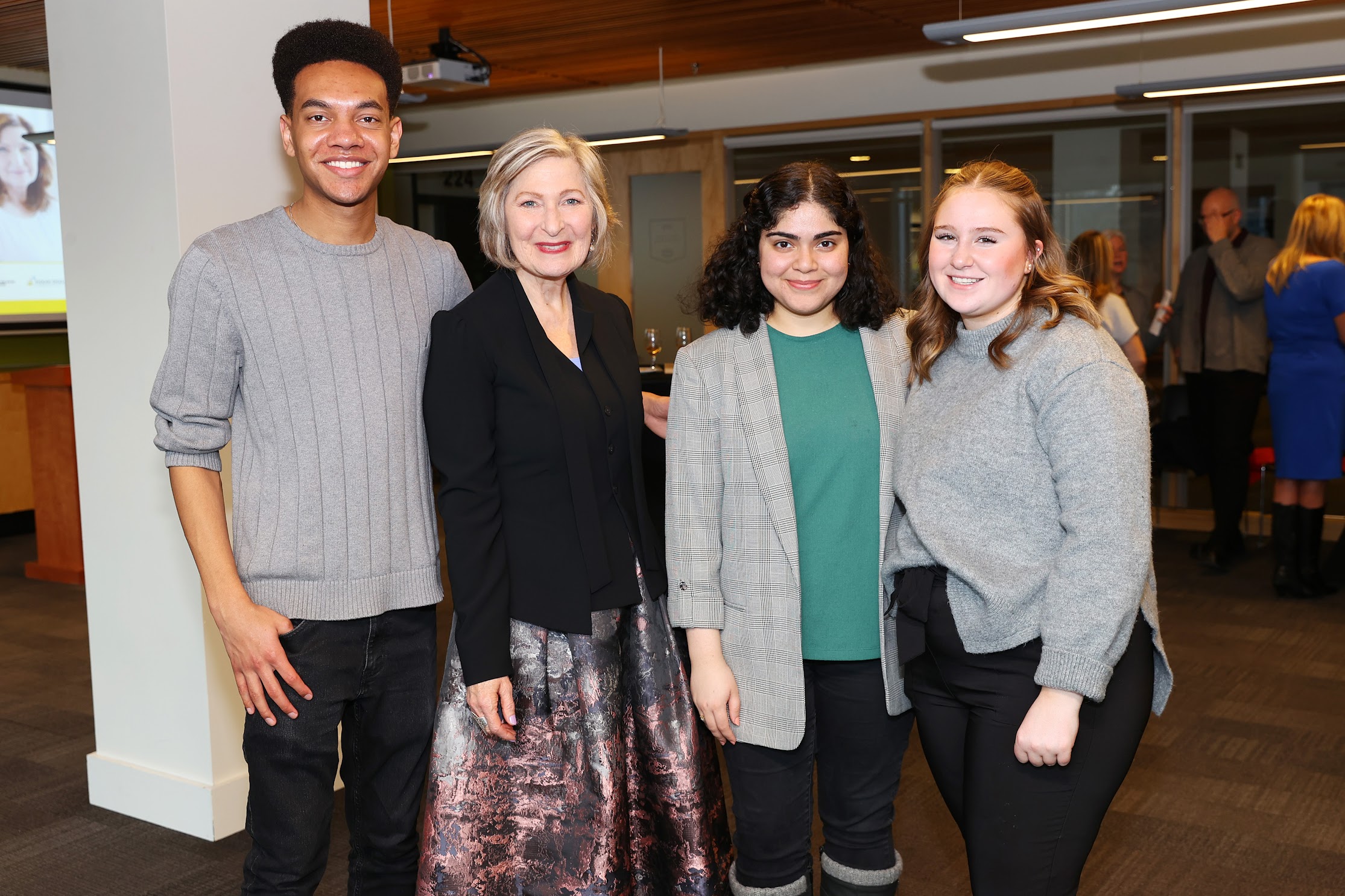
In 2024, Kriti, along with some other members of the ±«Óãtv Arts and Social Sciences Society (DASSS) executive committee had the opportunity to meet former CBC radio host and journalist Anna Maria Tremonti. Ms. Tremonti was the featured speaker at the 2023-24 Shaar Shalom Lecture at ±«Óãtv University.