Student Testimonials
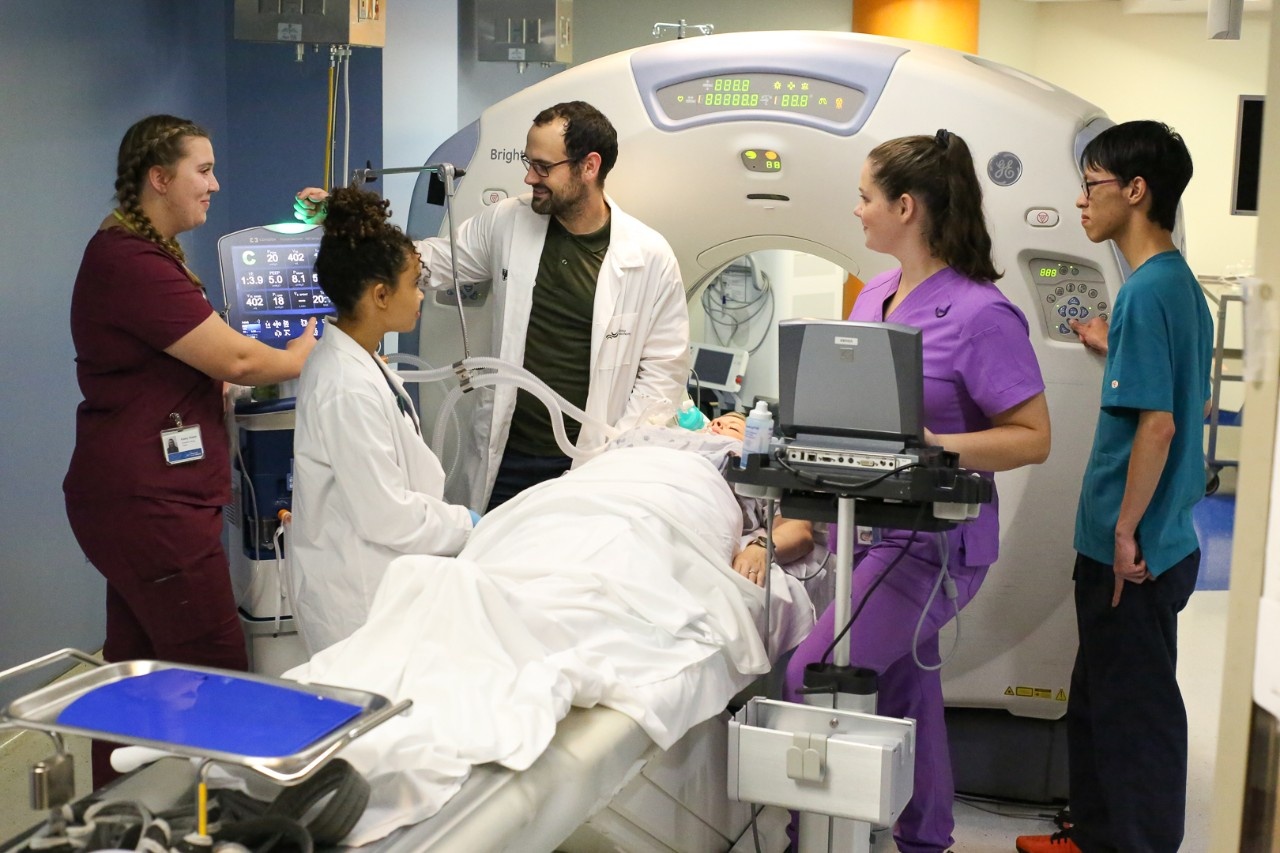
What does an average day in the BHSc program actually look like? From morning classes to hands-on clinical experiences, our students share snapshots of their daily routines and experiences.听While every student's experience is unique, these testimonials offer an inside look at the academic and clinical components of the program.
听
Diagnostic Medical Ultrasound Technology
Year 1: Academic Day
Morning/Afternoon
Our classes started anywhere from 8, 8:30, or 9 and we ended classes around 1:30-4, but it depends each day. If you have an IPHE event, the day can end around 6pm. Being in the ultrasound program, we have our own labs with machines so we spent at least a day in there for our labs plus any extra practice time we would use to scan each other. We had regular classes on ultrasound content only and then classes with the other 3 health science programs as well as physics with lots of other 鲍鱼tv students. In between classes you have time to eat/take a break until your next class.
Evening/After Hours
A lot of the nights you also spend doing more school. Studying, assignments, projects, etc. I would say you can spend 2 hours or more of your time on homework and then for us in the ultrasound lab, we tried to go 2-3 times a week to get assignments done and just practice. I also work part time (once a week) during school and I found it manageable as it was on the weekend.
Highlights/Challenges
It鈥檚 nice to actually scan and get hands on experience - I think for all health science programs you get a lot of hands on/patient interaction early on which is really good. This program requires a lot of time put into it so it was hard for me to balance other things such as hanging out with friends and sports but you can have a good balance of both but just making sure school is first and getting the assignments done ahead of time is always a good habit.
Year 1: Clinical Placement
Morning
Depending on which preceptor I am joining each day (I have two), I usually begin my clinical shifts between 8 and 8:30 AM! My placement is located at the Dr. G.B. Cross Memorial Hospital in Clarenville, Newfoundland. This small town is about two hours and 30 minutes from my house (by car). Therefore, I plan to drive back home on an occasional weekend. My first tasks are to help my preceptor turn on the lights and machines in both ultrasound rooms. I then begin my morning logs. I start by making a note on my phone or in my journal and organize the page into columns for each time slot. I then help my preceptor set up the two ultrasound exam rooms by pulling a new sheet of paper from the rolls over each stretcher. We do most of the disinfecting before we leave in the afternoon, which saves us time in the morning.
Midday/Afternoon
Here in Clarenville, we see plenty of pelvic, breast, and thyroid ultrasound exams! In terms of patients, I always start by introducing myself - including the fact that I am a student. It is often easy to tell if a patient is feeling nervous or content by examining their body language and demeanour. My preceptors and I always try to make our patients feel as comfortable as possible! There are currently no other students here, but there will be a new staff member starting next week! She is a freshly-graduated sonographer that is close to my age. During each exam, I do find it difficult to be on my feet for extended periods of time. This is why I make an effort to keep my knees unlocked, shift my weight between legs, and take every opportunity I can to get moving! This keeps my circulation flowing - and me awake haha. I am very fortunate to get time to scan on my own. So far, I have been doing focused aortic and thyroid exams with guidance from my preceptors!
End of Shift
Once the day winds down and our last patient has left, I disinfect our equipment and restock the supplies if I notice they are running low. I then sit with my preceptor and complete my logs while they protocol. We often discuss what we have seen throughout the day and I ask any questions I may have. My shifts are supposed to end at 4:00 PM, but most days we are finished up 30-45 minutes early.
Highlights/Challenges
The parts of my day that I enjoy the most are definitely the interactions I have with each patient. I love making them feel heard and comfortable during their examination(s). So far, I have noticed that patients are extremely receptive to students! They always wish me luck in my schooling and are very open to letting me scan. Another aspect I love is the feeling of capturing a crisp, clear image. It is so exciting to watch my progress, I am looking forward to improving my scanning skills each day.
In closing, I have truly been enjoying my time in Newfoundland! The staff here share a sense of community and have welcomed me with open arms. Since Newfoundland only has a handful of ultrasound technologists, the ones that we do have cover all types of exams! This is definitely a bonus for students, as we get to see things that you normally wouldn't in a largely-populated region.
Year 2: Academic Day
Morning/Afternoon
For second year classes started a little bit later at 10:35am and the day usually ended around 2pm. So most of us would just go home afterwards. We鈥檇 have small snack breaks in between classes but we didnt need a big gap for a proper meal. Most of the time classes are lectures. We had group discussions this year to start one of our classes and that was nice to break up the lecturing. Our labs were earlier in the morning which is nice since sometimes you need to be fasting (not eating).
Evening/After Hours
I would go to the school early before our 10:30am classes and get a lot of my homework done during that time so in the evening I could work, study or go to the gym. For me, the evening was usually reserved for studying. I tried to have most of my homework submitted earlier in the day so I didn鈥檛 forget to submit before the deadline. I always have a calendar for each month and then each week I write out on my white board what I want/need to complete for that week and that鈥檚 helpful for my time management.
Highlights/Challenges
You have to be willing to spend time at your projects. Most of these aren鈥檛 things that can be done quickly in one sitting and planning time you will be working on projects and not putting pressure on getting it done the day it鈥檚 due is very helpful.
I鈥檓 not great at multitasking in class. I can鈥檛 write something down and listen to what鈥檚 next at the same time. So downloading the PowerPoints and jotting quick notes next to the PowerPoints has been helpful for me.
Nuclear Medicine Technology
Year 2: Clinical Placement
Morning
My clinical days begins anywhere between 6:30 and 8:30 am depending on my shift. I鈥檓 placed outside of Nova Scotia, but the practices are similar. I begin my day either in the lab creating radiopharmaceuticals, performing quality control tests on equipment, interviewing and injecting patients or working with the cameras to acquire patient images.
Midday/Afternoon
Throughout the shift I perform or assist with any number of tests. Typically there are cardiac images on one camera and the other camera will have renals, bone imaging, parathyroid, thyroid, gastric emptying or gallbladder imaging depending on the day. I talk to many patient when preparing them or setting them up for tests. The job can be taxing when dealing with difficult situations, but the preceptors are always supportive and there to step in when needed. There is often a lot of sitting, standing, assisting with patient transfers and retrieving patients from various areas for their images.
End of Shift
At the end of the day, we ensure we don鈥檛 have any radiation contamination on ourselves or the equipment. Documentation is completed throughout the day between scans. If there are scans to be completed, we ensure our coworkers are okay to take over and have all the required information. Depending on the shift I leave the hospital between 2:30-4:30.
Highlights/Challenges
There are challenging days as with any career. In patient cases can be especially difficult and strenuous because of patient discomfort and the various equipment that may need to be monitored. Multitasking is an important part of the job but there is normally an extra set of hands around to help out if needed. I enjoy speaking with the patients and giving them as much time as possible. Many of them just want someone who will listen. Time management is important when dealing with a chatty patient, but I always try to give them as much time as I can.
Radiological Technology
Year 1: Academic Day
Morning/Afternoon
I start my day with classes beginning at 8:00-8:30am every day of the week. There鈥檚 typically have classes different times throughout the day until 3:30-4:00pm. We have lectures, labs and tutorials for some classes. Lectures are mainly the instructor teaching us content with sometimes added in activities for things like exam reviews. This could be a jeopardy game, stations with review, etc. labs are more hands on. We practice positioning as if we were taking radiographs on patients in the hospital. We typically have breaks in between a few classes so eat then, but the instructors are super understanding if you need a snack in class if the break was missed.
Evening/After Hours
I have assignments and readings I do each evening after class. I always try to check the course schedule each night so I can read any notes/readings before going to class the next day. I would say I spend on average 2 hours a day studying and preparing. Sometimes more closer to testing dates. I do work a part time job while in school which is challenging at times.
Highlights/Challenges
I love the closeness of my classmates and the instructors. I enjoy that the instructors care so much about their students and want to see you succeed. I think time management while working part time and being a full time student is definitely challenging at times to stay on top of everything.
Year 2: Academic Day
Morning/Afternoon
My day typically starts pretty early. I do not live in the city, and have to drive around 45 minutes to get to class. Most mornings we have a lecture starting at 8:30am, that goes for around an hour to an hour and a half. You get a brief break after class, before another one begins at 10am. You usually get a couple hour break after that, until another afternoon class that could potentially be across at studley campus, or a learning lab in the practice room (rehab centre), if it鈥檚 not in Fenwick. Throughout the lectures, there may be opportunities for group work to collaborate and work on activities.
Evening/After Hours
There is always work that you can be doing. Sometimes it feels like it鈥檚 never ending鈥ut it鈥檚 worth it! It is important to stay on top of your work to not fall behind. Planning ahead by reviewing notes, having an organized calendar, looking at upcoming assignments and tests are all good to do. Take it day by day and begin by preparing anything you need to for the next day ahead. Whether that may be readings you need to do, assignments/activities, pre labs, or just being prepared for what you are learning the next day in class. I also work casually as a TA in DI, which can be a lot to balance sometimes with the school workload. But they are flexible to work around my school schedule.
Highlights/Challenges
Sometimes things feel overwhelming, but the chaos is good! It鈥檚 great when you鈥檝e completed things on your checklist. One thing I enjoy is the feeling of submitting an assignment, such a relief! Sometimes time management can be hard and it is easy to procrastinate and get distracted, but you learn that it is so much better to get things done sooner. You produce better work when you鈥檙e not rushing, cramming and stressed.
Year 2: Clinical Placement
Morning
My clinical shifts start at 8 in the morning. I have done both of my clinical placements in my home province of Newfoundland, and my placements were at Western Memorial Regional Hospital in Corner Brook. I love it at WMRH as it is close to home, and the patients and staff are very nice here. They built the new hospital in 2023, so all of the equipment is brand new, and luckily for me, the X-ray equipment is the same as in our practice room at 鲍鱼tv, so I was very familiar with the equipment. The Technologists are all very nice and welcoming, and always compliment the 鲍鱼tv students on how well we know our stuff!
Midday/Afternoon
At WMRH, we have 3 general radiology rooms, a fluoro room, and we have a fairly busy OR with most of our procedures being urology and orthopedics surgeries. Newfoundlanders are known for being kind, and that can be seen in the patients. The patients are all very nice, and when they find out I am a student, they get very excited and are happy to assist in my learning. I don't think WMRH gets a lot of students because when the staff find out I am a student, they get very excited and ask how I am doing, where I am from, and if I am liking it at the hospital.
End of Shift
Typically, my day ends around 3 pm as the day dies down, but if there are cases I want to watch or try, the technologists tell me to stay as long as I want.
Highlights/Challenges
Honestly, my favourite part of the day is when I get to do interesting cases or go to the OR. I was a bit nervous about the OR at first, but it is my favourite aspect of clinical. When the technologists see that there is a case in the OR, they ask me if I want to go for it, which I always do. Doing cases that are not the everyday ones are the ones I like the most. For example, doing an exam to rule out a certain pathology, and the patient actually has that pathology.
Year 2: Clinical Placement
Morning
My clinicals start either between 7:30 or 8:00 am. There are some night shifts that appear in second year that are also done. The placement for my summer clinical is within my hometown, a couple of hours outside of the Halifax region. As a student in second year I am able to take diagnostic x-rays of patients under minimal supervision of a preceptor, learning valuable skills in positioning, patient care, and time management along the way.
Midday/Afternoon
I do a lot of general x-ray that includes any imaging of limbs, chests, and the odds and ends. I assist with fluoroscopic cases that include arthrograms. There is a lot of standing involved in this carrier, a lot of fast moving and ensuring that patient's are stable enough to stand and move around. Being able to lift patients with others, and having skills with leadership is a must.
End of Shift
My summer clinical ends around 4 in the afternoon. Around this time the evening staff come on and relieve the day staff. As a student I make sure that I make the turn-over process as smooth as possible, ensuring that evening is cleaned down that needs to be, and that every bit of information is passed onto the next crew.
Highlights/Challenges
I enjoy being busy. I also enjoy talking to patients about daily stuff. Small talk, how things have been, so on.
Clinical is the highlight and joy of my year.
Year 3: Clinical Placement
Morning
I start my day typically at 6-6:30 in the morning waking up to get ready for clinical. I either bike, drive, or take the bus into the clinical site that I'm at and usually get there 10 minutes before. Currently I'm in my home city in Halifax and I start my shift at 8. I get in and figure out who I am working with for the day and what cases we may have.
Midday/Afternoon
Throughout the day, I will work through cases and paperwork, sorting out who is getting scanned when and what they will have done. Currently in CT, I put in IV's for patients, track them in our new system and also work with the technologists to perform scans. You are up and moving most of the time between the rooms and occasionally to speak with the radiologists about protocols.
End of Shift
At the end of the day, we finish up our cases and leave, letting any of the technologists anything coming in that is important such as a stroke or trauma. Any equipment issues or issues with the system we are having and to have a good shift. Usually I end at 4 and head straight home.
Highlights/Challenges
Usually I enjoy seeing and working with patients and seeing interesting pathologies and traumas. I also find as you get to know the techs you start to enjoy working with them more and more. I would say one of the bigger challenges is how exhausting it can feel after work and having other things to do such as another job.
Respiratory Therapy
Year 1: Academic Day
Morning/Afternoon
I start my day with a morning run and coffee. Then I make sure I have all my things for class that I need before taking the bus to Fenwick. Most of our classes in first year started around 8-9am. I really liked our schedule as we start early but also finish early. We have a variety of classes that introduce medical terminology and new concepts that you need for Clinical Practicums. First year RT only has 1 lab in first semester and 2 in second for program specific classes. The labs are located in the hospital and feature very hands on learning about medical instruments and tequniques. Three hours is allocated for these labs, but we get a 15 minute break halfway through where you can go to the Hospital cafeteria for some snacks or coffee! Classes normally have 10 minute-1 hour breaks in between them. Most students stay in the building and just hangout or study in student lounges.
Evening/After Hours
Most days you should be reviewing for a hour or so. We don't have a lot of assignments, most of it is study and test based so you definitely want to spend majority of your time reviewing class concepts. For OSCE (lab based tests) it is very important to make sure you are going to lab in your free time to practice setups and patient scenarios if you are feeling a bit unsure. AND ASK THE PROFS! They are super willing to help and want you to succeed in this program!!
Highlights/Challenges
I am a very hands on learner, and although the coursework can feel heavy, having a lab day is great to connect the information from lectures to actual scenarios. Don鈥檛 stress too much about the exams, usually they are a broader version of quizzes, so if you can do well on quizzes, you鈥檒l do even better on exams!
Year 1: Clinical Placement
Morning
My clinical shifts began at 7am and ended at 7pm. I loved working 12 hour shifts, the time flies by when you are busy, and you get lots of time to review and study when its not. I am placed in Calgary, AB. I went out of province because my family lives here. I love how large and busy the hospital is! However, if you are looking at going out of province, remember a lot of the equipment and procedures are different. Keep a humble and open mind to learn about the way different hospitals do things. It was a learning curve to adapt to new equipment but it all follows the same rules and laws that we learn about in school! So far in Clinical I have done lots of ABGs and various oxygen setups. I got to assist with intubation and cardioversions in Emergency settings.
Midday/Afternoon
I also got to see Bronchoscopy, Trach care, BiPAP/CPAP setups. We do lots of patient assessments and interviews, it is very important to know lung sounds and what they can indicate. Many patients are very nice and receptive to students, however dont be alarmed if you have some older patients that are not nice and do not want to talk with you. It is not personal!
End of Shift
We do a lot of charting, and each preceptor has different ways they chart and how they will want you to chart as well. Be receptive to their critiques, they know what they are doing. Ask questions at the end of the day about anything you were unsure about or had any intrest in. You can learn so much by asking! I usually got off my shifts about 1 hour early, so 6pm.
Highlights/Challenges
I enjoy the variety of patients that the ED brings in. The exposure to different types of patients was really helpful when applying my in class learning. I got along very well with my preceptor by creating a relationship with them, not just shadowing. They will trust you to do more when you have a good relationship and prove you are capable to take on responsibility!
Year 1: Clinical Placement
Morning
I am placed in Summerside PEI, out of province at a more rural site. Me and another girl in the program switch shifts weekly (ex. I am 7:30am-3:30pm then she comes in for 3:30pm-11:30pm). For the morning shift we would go over who are current patients are the go to ICU rounds and check RT equipment in the ER, ICU and in our work room.
Midday/Afternoon
RT鈥檚 check in with every department. We get to interact with all types of patients and healthcare workers. We are usually up on our feet and moving around pretty consistently however sometimes it can be slower which gives time to finish up some school work or debrief about past patients. We get to help anyone from neonates to people in their 90s. We attend almost every C-section at my site and any high risk natural births as well as watching the occasional bronchoscopy. We do respiratory assessments, we give medications with puffers, we set up and adjust settings on ventilators, airvo鈥檚 etc. and we are apart of the code team meaning we run to any code blue in the hospital to help with any airway trouble. After we see a patient we try and chart it in a progress note so that it doesn鈥檛 pile up at the end of the shift.
End of Shift
To end up the shift, we give report to the next RT and debrief any information they need to know about our patients.
Highlights/Challenges
I really enjoy going to the c-sections, it鈥檚 always so fun to see the babies and help them if they need any help. Sometimes it鈥檚 hard to ask questions to your preceptors as it can be intimidating but just remember they are there to help you learn and make you better!
Even though I am just a first year, I think it鈥檚 important to get experience in both a rural (more quiet) spot as well as a city (busier) spot to see what the differences are and think about what environment you want to work in.
Year 2: Academic Day
Morning/Afternoon
I start my days around 6am when I wake up and get ready for class, most of my classes begin at 9am but I like to be early and have time to get ready. Once I arrive to my first class at 9am, I usually have a 10 min break where I eat some snacks and then my second class around 10:40. After my second class, I have a break until 1pm, which is when I eat my lunch. at 1pm I go to my lab for mechanical ventilation, we usually learn about a new vent every week and will do case studies alongside the lab.
Evening/After Hours
Depending on the day, I鈥檒l study and do review between 1-3 hours and if we have an OSCE, I will go to the lab with my friends to practice for a couple hours. I also am part of EDI committee and student council so I will complete my work for those committees as well. I enjoy going to the gym and I鈥檒l go 4-5 times a week at Dalplex. My preparation for the next day varies whether I have any exams or OSCEs, however, what stays consistent is that I鈥檒l meal prep my lunch and snacks every night.
Highlights/Challenges
I love having classes in the morning because my day ends earlier, which is especially nice for when you have exams the next day, as it gives you time to study. Sometimes I find time management challenging with all the exams, assignments, OSCEs, and quizzes we have, but we have great professors who support us.
Year 2: Clinical Placement
Morning
I start my clinical at 7am at the Georges. L. Dumont hospital in Moncton New Brunswick. When I arrive, I change into the hospital scrubs and get report from night shift with my preceptor. Around 8:15am, we will go down to the ICU for our checks and do all of out initial checks, then at 9am we join rounds with the nurses, doctor, pharmacist, social worker, physio, etc. I spend most of my time in ICU to get ventilator experience but I will also occasionally do floors and EMERG if anything exciting is going on!
Midday/Afternoon
During the midday/afternoon we do our regular vent checks, patient checks, transports for scans, bedside spirometry, etc. Everyday looks a little bit different but what stays consistent is our Q4H checks and charting. If it鈥檚 a busy day and we have a lot of patients, we鈥檒l do all our checks at once and then chart all at once instead of alternating between the two. Some of my favourite days in ICU are when we do extubations, ZEEP trials, patient transports and bronchoscopies.
End of Shift
At the end of my shift, I鈥檒l make sure all my charting is done and then assist my preceptor with giving report to the night shift RT. I usually finish my shifts around 7:15-7:30 when I鈥檓 in ICU, sometimes later if I鈥檓 in EMERG as we get STAT calls and I鈥檒l go home once we are finished with that patient and they are settled in.
Highlights/Challenges
I love working with my preceptors, they are so knowledgeable and I learn so much from them clinically. It is awesome to work with people who are passionate and skilled at what they do. The only challenge I faced at this hospital was the French initially, I understood well but my speaking was not as proficient. I found it difficult to communicate with other healthcare providers outside of my preceptors, but after some time I got better!
Year 3: Academic Day
Morning /Afternoon
My academic days typically started at 8:30 or 9 am until about 3:30 or 4pm. A typical day consisted of 2-3 lectures and a lab. The lectures often consisted of lecture slides and taking notes with heavy emphasis on asking questions. Depending on the class, we would end with some group work, a quiz, or a Kahoot. The labs always consisted of group work and hands on learning.
Evening/After Hours
After class, I would typically go home to do homework, review material, or complete assignments. I studied about 3-4 hours every night, except for nights I had extracurricular activities. I played sports twice a week and worked part-time once a week. I was able to keep a decent work-life balance, however it sometimes felt overwhelming during periods of high stress (exams, quizzes, due dates). Although studying 3-4 hours a night might feel like a lot, it allowed me to stay on top of my notes so I didn't have to cram before an exam, and allowed me to keep working and playing sports.
Highlights/Challenges
I enjoy attending labs for the hands on work, group collaboration, self paced learning, and direct professor feedback. The biggest challenge I had was balancing everything; my academics, social life, mental health, relationships etc. Making time for yourself is very important and something I learned to develop during this time!
Year 3: Clinical Placement
Morning
As a third year student, I have clinical shifts all year long so my start time changes depending on what rotation I am in and at what hospital/clinic. Most days, my clinical shifts start at 7 or 7:30am but I am expected to arrive about 20 minutes early. For the majority of the year, I was in Halifax but I occasionally did placements in rural areas like Bridgewater. My first tasks for the day include receiving report, reviewing patient charts, doing morning assessments, and attending interprofessional rounds. During more assessments I auscultate, check the endotracheal tube position and cuff, try to wean ventilator settings, and check my emergency equipment. When rounds start, I listen attentively for the daily plan and share information regarding ventilator settings, auscultation finds, suction findings, and the last arterial blood glass.
Midday/Afternoon
In the afternoon, we do basic ventilator checks and more weaning if possible. I might assist with other procedures like bronchoscopies, tracheotomies, or do some extubations.
End of Shift
At the end of my shift, I gather pertinent patient information including labs, meds, and imaging results to pass on to the next RT. I check in with nursing staff for plans for the next shift/day. After giving report to the RT coming on, I head home around 7/7:30pm.
Highlights/Challenges
The highlights of my day are always getting to perform new skills and seeing a patient improve. Some aspects that can be challenging include time management and prioritization. Especially with many complex patients, it can seem like there is not enough time in the day to get everything done. That's where prioritization comes in as some tasks are more imminent than others.