
Dr. Kate Ortenzi, PhD
Adjunct Professor
Research Topics:
- Relation Ecology
- Science and Technology Studies
- Coastal Systems Ecology
鲍鱼tv
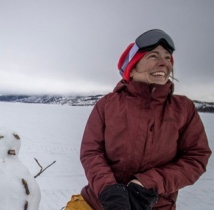
Dr. Kate Ortenzi is an interdisciplinary marine social-ecological researcher whose work bridges Western science and Indigenous knowledge systems in service of more relational, equitable approaches to ocean governance. She holds a PhD in Biology from 鲍鱼tv University, where her doctoral research examined the intersecting relationships between scientists, coastal communities, and marine ecosystems. She also holds a Master of Public Policy and a Master of Sustainable Development & Conservation Biology from the University of Maryland.
Dr. Ortenzi currently serves as Project Coordinator at the Polish Institute of Oceanology, where she leads the transition of the Integrated Marine Debris Observing System (IMDOS) into a globally recognized platform for marine plastics methods and data harmonization and the development of a pilot Essential Ocean Variable for the Global Ocean Observing System (UNESCO IOC GOOS) . Her career has spanned government, conservation, and community-based research, including roles as an Economic and Political Affairs Specialist with the U.S. Department of State, a Forest Ecologist with the U.S. National Park Service's Inventory and Monitoring Program, and a Seafood Fraud Investigator at Oceana. Across these roles, her work has consistently centered relationality, systems thinking, and data sovereignty.
Dr. Ortenzi is an active member of the international polar research community, serving on the Advisory Board of the U.S. Climate Science Legal Defense Fund, as a member of the Arctic Humanities Working Group at the University of the Arctic, and on ICES working groups on Integrated Ecosystem Assessment for the Central Arctic Ocean and Marine Litter, among other roles. She is currently a co- executive producer for APECS' "Polar Times" podcast. She regularly presents and facilitates workshops on research ethics, data sovereignty, relational approaches to science, and science communication.