

ł§ł¦ľ±´Ç˛µ°ů˛ą±čłóľ±±đ˛őĚýis a radio show and podcast about the people who make science happen, presented by the Faculty of Science and campus-community radio station CKDU 88.1 FM.Â
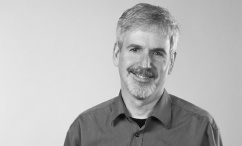
In this episode of Sciographies, we talk to Maxine Westhead — marine biologist, marine spatial planner, and director of ±«Óătv’s Marine Affairs Program (MAP).
Host Dr. David Barclay sits down with Maxine to explore her 25-year career with the Department of Fisheries and Oceans Canada (DFO), where her work on marine protected areas helped shape ocean management in Canada and laid the groundwork for her leadership at MAP.
Maxine reflects on growing up in Ontario and the path that brought her to Nova Scotia. She also shares her passion for health and Olympic weightlifting, and what drives her as she leads the program into its next chapter — including the development of a new fisheries science program.
Below are some excerpts from the episode, edited for clarity and length.
David: So where did you grow up?
Maxine: I grew up in a little town called Alliston, Ontario. I grew up on a farm and was always passionate about animals. I later moved to the big city, first to Toronto and then to Nova Scotia in 1997.
David: Okay. Your parents were farmers or you're just living on a farm?
Maxine: We were living on a farm, and my dad was a software engineer. But when my dad introduced himself to the neighbour, a dairy farmer, the neighbour said, “Oh, you just bought that farm over there. I guess you’re not going to farm it?” My dad thought, “Yep, I guess I’m going to farm it.” He took it as a challenge — and he did. We had cattle and mostly grew grains in the fields.
David: In high school, you're interested in science, but you have this social science part of you. Is that growing or are you reading a lot of literature?
Maxine: I was all science. I didn't particularly like English. I avoided art like the plague. I just love science, chemistry, biology, math, not necessarily good at the math, but I was able to do it in high school. I just loved animals. The soft side of me is all about animals.
David: What do your activities look like?
Maxine: I started running when I was 13. My dad was a hardcore triathlete in the eighties when it was not cool to wear spandex and my mom was a fitness instructor. I've been hardcore fitness my whole life too. I enjoyed being outdoors, doing stuff outdoors, skied.
David: At DFO you spent much of your time working on marine protected areas. Can you first tell us what a marine protected area is?
Maxine: I tell my students this all the time: it's not necessarily what you think it is. Just because it says it's protected doesn't mean it is protected. It's essentially just a polygon on a map. It has to have boundaries. It doesn't have to have zones, but it can have zones within it where you can do different levels of activities. It has to be designated under law or some recognition, actively managed, and monitored.
David: So it has a lot of criteria, but the fundamental underpinning is that it should have fewer activities allowed than outside its borders, right?
Max: It should be regulated in some way.
David: When you say it's not protected, you're saying it is protected from something but that it might not be what we imagine? How does that work?
Maxine: Within Canada it's quite complicated. My understanding is you have 18 federal departments that have some role in the ocean – DFO is the big one, Transport Canada, Environment, Climate Change Canada. You have to work collaboratively with all of these regulators and different federal agencies, but DFO really does have the lead. This is under Canada's Oceans Act. I was hired in 1998 as an intern at DFO just after the Oceans Act passed. I was in the right place at the right time. They were building offices across the country, essentially to implement the Oceans Act, so my entire career with DFO was spent trying to implement it.Â
David: Can you give us the highlights of that Act and who wrote it?
Maxine: I know it was championed by Scott Parsons. The highlights of the Oceans Act are it essentially requires DFO to lead and facilitate the implementation and development of integrated management plans. You could consider that today to mean marine spatial planning or coordinated management of our oceans, but in all of Canada's waters.
David: Right. How do those decisions get made and what kind of the data are they based on?
Maxine: This is what I call the art of boundary making and the art of marine protected areas. My colleagues were out on vessels bringing data back about the ecosystem — coral, sponges, whales — and then we would use that in our GIS workspace.
David: So you incorporate all these data layers?
Maxine: We used this to help us find areas that are of interest like high conservation value areas. Once we find an area of interest, we try to draw the lines, make boundaries, zones, and the protection level. It's based on the natural science of course, but then there's also the social science, society, and political will.
David: Since joining Dal as MAP’s Director, you've been instrumental in developing this new fisheries science program. Can you tell me a little bit about it?
Maxine: When I started, there was a four-page concept paper for the program. Drs. Joanna Mills Flemming and Aaron McNeil had been working with two DFO research scientists, Heather Bowlby and Dave Keith. My understanding is that the four of them really put the vision and curriculum ideas together. I believe the impetus for it was the passing of Dr. Jeff Hutchings and, of course, the previous death of Dr. Ram Myers who left a bit of a gap in fishery science.
Listen to Maxine Westhead’s full episode of Sciographies at 10 a.m. on Thursday, March 19 on  in Halifax or find it on ,Ěý, and other popular podcasting platforms. You can also listen to previous Sciographies episodes on the same platforms and at dal.ca/sciographies
Also in this series...
  ĚýĚý
- Meet John Batt, manager of ±«Óătv’s Aquatron
- Meet Dr. Rob Lennox, scientific director of Dal‑based Ocean Tracking Network
- Meet Dina Rogers, PhD candidate & biochemist
- Meet Dr. Sarah Chisholm, educator & mathematician
- Meet Dr. Simon Gadbois, canid & animal behaviour specialist
- Meet Maxine Westhead, marine biologist